
This article is sponsored by Quest Dehumidifiers.
Vapor pressure deficit, more commonly referred to as VPD, is an agricultural concept that measures the difference in pressure between the humidity inside and outside of a leaf. For cannabis growers, getting a handle on this metric can yield healthier, more robust plants.
Controlling VPD can enable growers to increase water and nutrient intake, and as a result, increase and optimize plant growth. In addition to encouraging plant health, understanding VPD lets growers better regulate the surrounding plant environment to keep pests at bay.
VPD describes how the plant feels and puts a number and value to the comfort of the plant, said Clif Tomasini, business director of Quest Dehumidifiers, which provides energy-efficient dehumidifiers to some of the largest indoor grows in the US.
“Humans can technically function at zero and one hundred degrees Fahrenheit, but they tend to be most productive and happy somewhere between those two extremes. Similarly, plants have conditions where they are most successful. The more comfortable your plants are, the more likely it is that they will achieve their best growth,” Tomasini said.
Get more tips and advice on how to treat bud rot and mold issues from the experts at Leafly.

Maintaining a ‘comfort zone’ for humidity and VPD helps keep cannabis plants healthy. (Courtesy of Quest Dehumidifiers)[/caption]
Incorporating VPD strategies can seem like a large undertaking to those new to the concept. But most growers are already taking the measurements they need to determine optimal grow room VPD levels, which can impact factors like moisture and plant health.
Measuring VPD and What It Means
To determine VPD, first measure the relative humidity (RH) and temperature with hygrometers and thermometers, tools likely already integrated into your commercial growing operation. Once these measurement readings are known, you can reference VPD charts to determine the VPD of your grow.
Seth Lee, Denver grower and operations manager at Greenlight Cannabis Company, recommends referencing the charts because most are color coded to indicate low, healthy, high, and dangerous transpiration levels.
“With this information, you can fine tune VPD levels that work best for you, based on the charts and how different strains react to specific VPD levels,” Lee said. “Success requires you to be flexible, so the charts should only be used as guidelines.”
Since VPD is inversely related to RH, a grow with a low RH will typically have a high VPD. When you’re first starting to work with VPD, it helps to maintain a lower RH—around 55 percent—until you gain confidence with the concept, Lee said. This will ensure RH levels stay in control and prevent the environment from becoming conducive to mold or mildew growth.

Humidity control is essential for a healthy cannabis crop. (Courtesy of Quest Dehumidifiers)
Because different cannabis plants, strains, and grow operations have different needs and limitations, growers have to take a lot of variables into account when adjusting VPD. Even the stage of plant development has to be considered.
“VPD is important in all stages of growth, although optimal VPD changes as plants mature,” Lee said. “Clones and seedlings don’t have developed root systems to transport water and nutrients, so they require a much lower VPD to prevent them from drying out.”
Once roots become established, you can gradually increase the VPD to encourage faster transpiration through your plants. Optimal VPD influences faster transpiration because higher temperatures cause plants to increase their release of water vapor.
Too Much of a Good Thing
Growers have to take care when tinkering with VPD levels, as the measurement is directly correlated with transpiration—the movement of water and nutrients through and eventually out of plants, mostly via their leaves and flowers. If VPD is too low and plants are unable to transpire, or VPD is too high and they transpire too much, the plants can become stressed, suffer, and die.

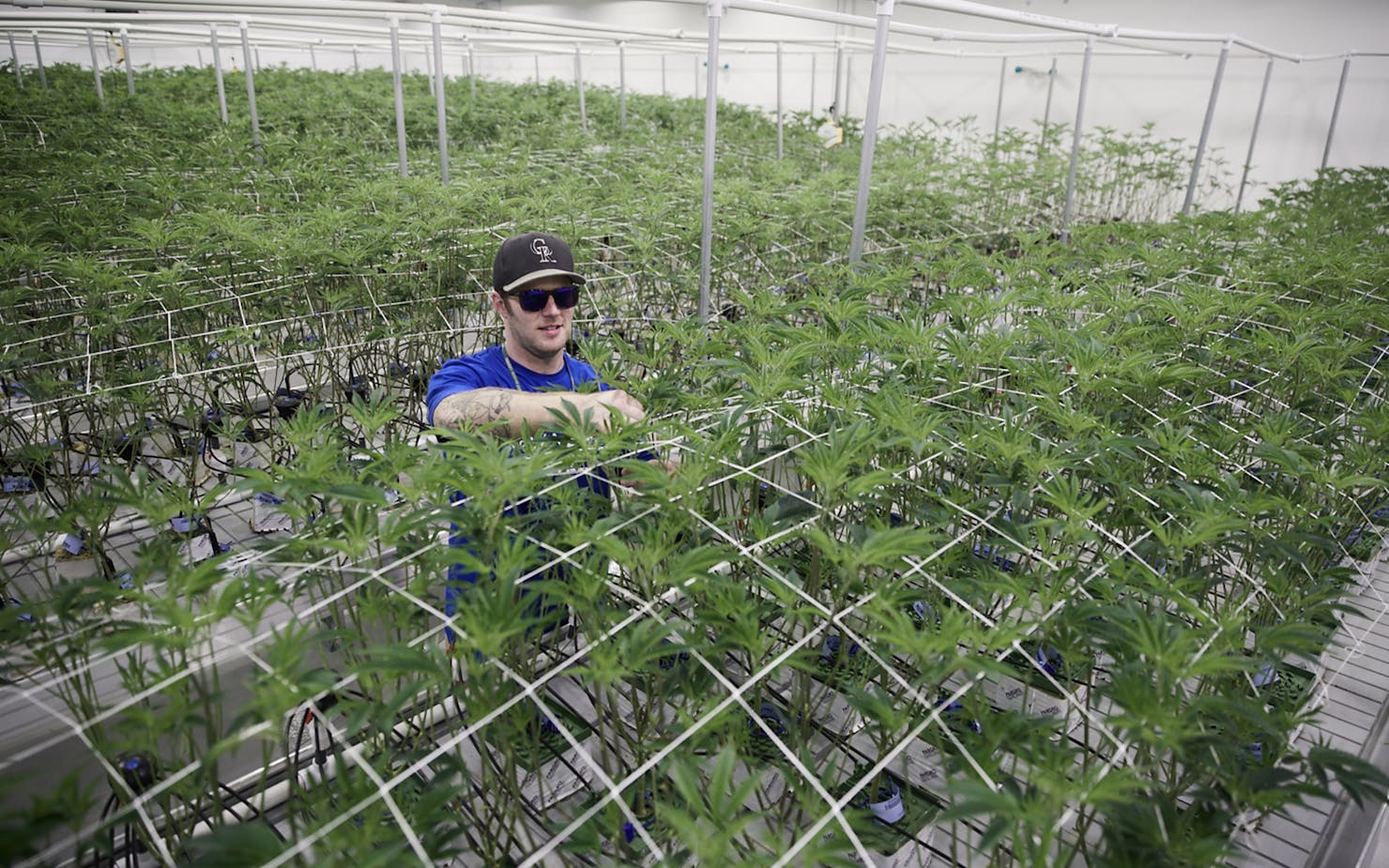
Controlling vapor pressure deficit can help young plants thrive. (Courtesy of Quest Dehumidifiers)
Ideally, plants should transpire at a rate that leaves them comfortable and growing optimally, said Mike Steffes, a research and development scientist at Quest Dehumidifiers.
If the air is too dry, plants transpire too much in an attempt to maintain vapor pressure equilibrium. This is problematic because it puts the plants at risk of burning from excess nutrient salts, Steffes said.
There are other risks unrelated to growth, such as mold, mildew, and insects that come with dangerously high or low VPD levels. If the air is too humid, you’re susceptible to an environment where mold and mildew thrive. If the air is too dry, you’re creating the ideal environment for insects like spider mites, which enjoy arid conditions.
Managing Safe Humidity Levels
Of course, nothing about a grow is static, so a VPD level that’s right at one moment may turn out not quite right the next. As plants transpire, there’s a constant release of moisture into the air, so it’s important to have devices in place to handle the increase in RH, especially at night when temperatures decline and humidity is heightened. Also anticipate an increased RH as you increase VPD through the growth stages, and be prepared to manage these humidity changes.
To manage RH increases, dehumidification is essential because air conditioning systems are optimized to cool air, not to remove moisture. If you’re unsure how many dehumidifiers your grow needs, use a savings calculator.
“Like everything else in a grow, consistency is key, and any VPD or environment adjustments should be made gradually,” Tomasini said. “To be successful, use VPD as a tool and be diligent about monitoring your environment and plant health.”


