We use cookies for certain features and to improve your experience. See our Cookie Policy and Privacy Policy to learn more

Leafly

Shop legal, local weed.

Open
advertise on Leafly
ShopDeliveryDispensariesDealsStrainsBrandsProductsLeafly PicksCBDDoctorsCannabis 101Social impact
  • Sign in
  • Create account
  • Strains
  • Shop
  • Shop
  • Delivery
  • Deals
  • Dispensaries
  • CBD Stores
  • Brands
  • Products
  • Leafly Picks
  • Learn
  • Cannabis 101
  • News
  • Leafly Learn
  • Science of cannabis
  • Doctors
  • Social impact
  • Lab partners
  • Download the Leafly App
  • Advertise on Leafly
    • Leafly.comUSA flag
    • Leafly.caCanadian flag
  • Help
  1. Home
  2. News
  3. Industry
  4. Arizona May Finally Begin Lab Testing Medical Cannabis for Contaminants
  • News
  • Cannabis 101
  • Growing
  • Strains & products
  • CBD
  • Politics
  • Health
  • Lifestyle
  • Science & tech
  • Industry
  • Reports
  • Canada
  • Podcasts
  • Leafly Lists
IndustryPolitics

Arizona May Finally Begin Lab Testing Medical Cannabis for Contaminants

Ben AdlinLast updated July 28, 2020

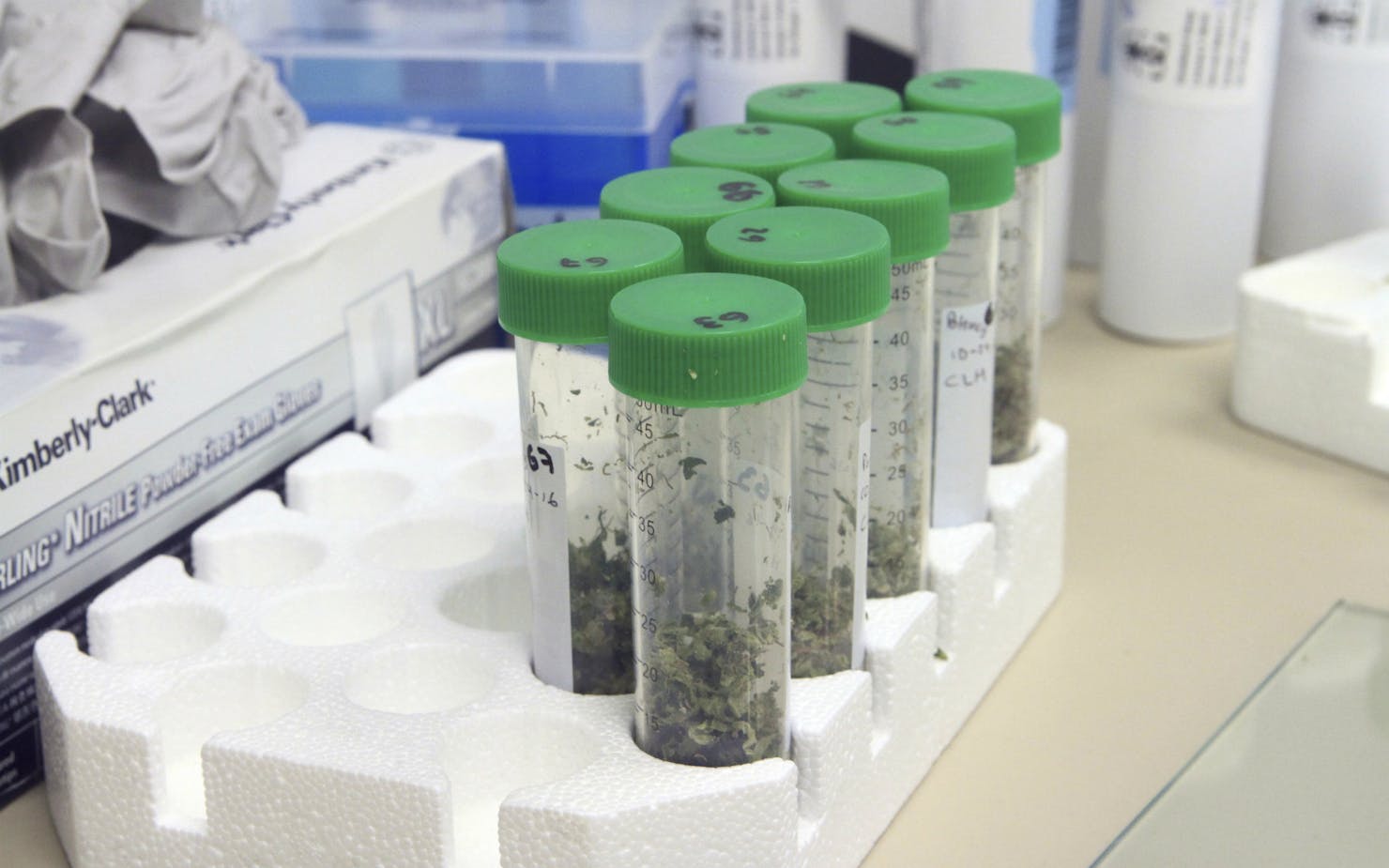
More than seven years after Arizona legalized medical cannabis, the state may finally begin to require lab testing to identify mold, pesticides, and other potentially harmful contaminants.

Under a proposal from state Sen. Sonny Borelli (R-Lake Havasu), the state would require testing starting in 2019. The bill would mandate that products be analyzed for mold and other chemicals and that product labels disclose all compounds used during production.

“This is supposed to be medicine,” Borelli told a local CBS affiliate. “The patient has the right to know what’s in their medicine.”

The measure, Senate Bill 1420, has earned broad backing from lawmakers, with nearly the entire state Legislature having signed on in support. It now has 78 co-sponsors, including Republican and Democratic leaders in both the House and Senate. There are 90 members of the Legislature.

The bill would also reduce the state’s $150 patient-registration fee to $50.

Borelli said the bill would also require accurate labeling of THC content. “If they’re going to advertise 20% THC and it gets tested at 5%, they need to re-label,” he told CBS. The text of Borelli’s bill, however, makes no specific mention of potency, THC, or other cannabinoids. Nor does it set specific limits on contaminants aside from the requirement that a sample “does not include mold.”

To pay for the testing, the state would appropriate $2 million from its medical marijuana fund surplus, which currently has a balance of $35 million. The money would go to the Department of Agriculture, which could then conduct testing itself or contract the testing out to a qualified third-party lab.

The bill would also reduce the state’s $150 patient-registration fee to $50, with renewals priced at $25. Borelli said the higher fee could no longer be justified in light of the fund surplus.

Most states that have legalized cannabis for adult use have put in place some sort of testing protocol. But ironically, in states where cannabis is allowed only for medical use, testing is often voluntary, poorly enforced, or simply not done. That can put patients at risk, especially those with conditions that weaken their immune systems.

In California, for example, two leukemia patients who used cannabis developed severe lung infections due to a rare fungus. One patient died as the result. While the infections couldn’t definitively be connected to the cannabis they consumed, subsequent testing discovered the same fungus on cannabis purchased at nearby dispensaries.

“We never suspected cannabis use,” said Dr. Joseph Tuscano, an oncologist and researcher at the University of California, Davis, who published an article about the infections. “But after I interviewed the patient, one of the common links was the use of medical marijuana.”

Under the Arizona measure, medical cannabis product manufacturers would be required to list all the chemical agents used on that product. Samples of the product would then be collected by either the state or a third-party contractor and tested to be sure the results match the product label. The lab would also perform tests to look specifically for mold.

Shop highly rated dispensaries near you

Showing you dispensaries near
See all dispensaries
  • Loading...
    Loading...Loading...
    Loading...
    Loading...Loading...
    Loading...Loading...
  • Loading...
    Loading...Loading...
    Loading...
    Loading...Loading...
    Loading...Loading...
  • Loading...
    Loading...Loading...
    Loading...
    Loading...Loading...
    Loading...Loading...
  • Loading...
    Loading...Loading...
    Loading...
    Loading...Loading...
    Loading...Loading...
  • See all dispensaries
See all dispensaries

“From an industry perspective I am certainly not opposed to it,” said Laura Bianchi, who heads the cannabis department at Scottsdale-based Rose Law Group and represents companies growing, distributing, and selling medical cannabis. “In fact I think testing requirements are an important component of any medical product.”

To prevent contamination during storage, the bill would also allow state regulators to inspect dispensaries and warehouses to ensure sanitary conditions.

Under state law, the Legislature needs to muster a three-fourths supermajority in both the House and the Senate. Borelli told CBS last week he’s “actually very confident we will be able to get this accomplished.”

The state Senate’s committee on government is slated to consider the bill on Thursday.

The Associated Press contributed to this report.

Shop highly rated dispensaries near you

Showing you dispensaries near
See all dispensaries
  • Loading...
    Loading...Loading...
    Loading...
    Loading...Loading...
    Loading...Loading...
  • Loading...
    Loading...Loading...
    Loading...
    Loading...Loading...
    Loading...Loading...
  • Loading...
    Loading...Loading...
    Loading...
    Loading...Loading...
    Loading...Loading...
  • Loading...
    Loading...Loading...
    Loading...
    Loading...Loading...
    Loading...Loading...
  • See all dispensaries
See all dispensaries
ArizonaLab testinglabelingmedical marijuanapesticides
Ben Adlin
Ben Adlin
Ben Adlin is a Seattle-based writer and editor who specializes in cannabis politics and law. He was a news editor for Leafly from 2015-2019. Follow him on Twitter: @badlin
View Ben Adlin's articles

The latest in Industry

  • Hemp access isn’t done yet: What you need to know about the federal government’s impending ban image
    Hemp access isn’t done yet: What you need to know about the federal government’s impending ban
    Morgan Rosendale
  • URB’N Dispensary: From pharmacist to cannabist image
    URB’N Dispensary: From pharmacist to cannabist
    Leafly Staff
  • Happy Eddie: From reality TV to real-life cannabis reform image
    Happy Eddie: From reality TV to real-life cannabis reform
    Leafly Staff
  • Delaware is open for business: Here’s where to buy legal weed image
    Delaware is open for business: Here’s where to buy legal weed
    Leafly Staff
Get good reads, local deals, and strain spotlights delivered right to your inbox.

By providing us with your email address, you agree to Leafly's Terms of Service and Privacy Policy.


Stay In Touch

Receive updates on new products, special offers, and industry news.

Something went wrong, please try again.

By providing us with your email address, you agree to Leafly’s Terms of Service and Privacy Policy.

Leafly mobile app
Get high for less.
Download the Leafly app.
Download Leafly: Marijuana Reviews on the App StoreDownload Leafly Marijuana Reviews on Google Play

Business Solutions
  • List your store
  • List your CBD store
  • List your brand
  • List your practice
  • Business log in

About Leafly
  • About us
  • Careers
  • Newsroom
  • Investor relations
  • Contact us
  • FAQs
  • Accessibility

Dispensaries in
  • Los Angeles
  • Seattle
  • Portland
  • San Francisco
  • Toronto
  • Detroit

Privacy & Terms
  • Terms of use
  • Commercial terms of use
  • Privacy policy
  • Do not sell my personal information

* Statements made on this website have not been evaluated by the U.S. Food and Drug Administration. These products are not intended to diagnose, treat, cure or prevent any disease. Information provided by this website or this company is not a substitute for individual medical advice.


© 2025 Leafly, LLC
Leafly and the Leafly logo are registered trademarks of Leafly, LLC. All Rights Reserved.